
Emily Dickinson wrote most of her poems alone, at a small desk in Amherst, Massachusetts, and shared almost none of them while she lived. That is why reading her feels so personal. These lines were not written for applause, but the way you write in a notebook late at night, honest and unguarded.
This collection gathers her genuine poem lines only, grouped by theme: hope, life and death, love and friendship, and her shortest famous lines. If you are new to her, our roundup of short quotes is a friendly place to keep exploring after this page. For her full life story, see her biography on Wikipedia.
Emily Dickinson Quotes on Hope
Hope is where most readers meet Dickinson first. She returns to it again and again, often through birds, dawn and small, stubborn light.
- “Hope is the thing with feathers — That perches in the soul” — Emily Dickinson — Her best-loved image of hope: a small bird inside you that keeps singing and never asks for anything back.
- “Not knowing when the Dawn will come — I open every Door” — Emily Dickinson — A quiet promise to stay open to good things, even when you cannot see when they will arrive.
- “A Light exists in Spring — Not present on the Year” — Emily Dickinson — She notices a brief, special light in early spring, the kind that lifts your mood before you can explain why.
- “I’ll tell you how the Sun rose — A Ribbon at a time” — Emily Dickinson — Sunrise described slowly, ribbon by ribbon. Lovely for someone who loves quiet mornings.
- “To make a prairie it takes a clover and one bee” — Emily Dickinson — Big, beautiful things can start very small. A gentle nudge when a dream feels too far away.
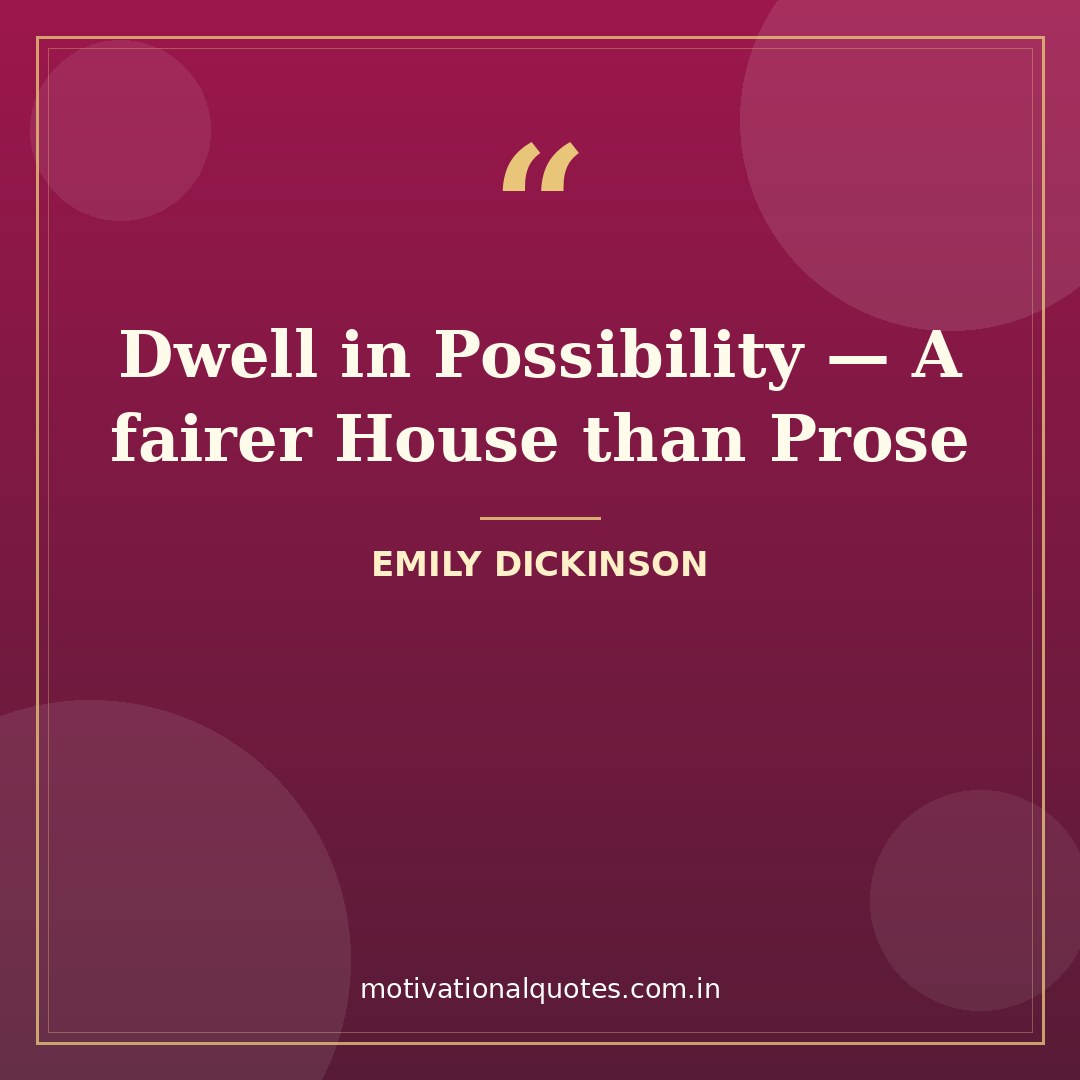
- “Dwell in Possibility — A fairer House than Prose” — Emily Dickinson — Imagination, she says, is a better home than plain fact. A favorite line for writers and daydreamers.
- “The Soul should always stand ajar” — Emily Dickinson — Keep your heart slightly open, ready to welcome a surprising, joyful moment when it comes.
- “Fame is a bee. It has a song — It has a sting” — Emily Dickinson — A playful warning that fame sings sweetly but can hurt, too.
- “Exultation is the going of an inland soul to sea” — Emily Dickinson — That soaring feeling when your spirit reaches something vast. Perfect for a fresh start.
- “There is no Frigate like a Book to take us Lands away” — Emily Dickinson — No ship travels as far as a good book. Send it to a friend who loves reading.
Emily Dickinson Quotes on Life and Death

Dickinson thought about death often, but rarely with fear. In her poems it is a visitor and a journey, and writing about it helped her praise life more clearly.
- “Forever — is composed of Nows” — Emily Dickinson — Forever is not far away. It is built out of ordinary moments like this one, which makes today matter.
- “That it will never come again is what makes life so sweet” — Emily Dickinson — Because moments do not repeat exactly, each one becomes precious. A tender line for slow, grateful days.
- “Because I could not stop for Death — He kindly stopped for me” — Emily Dickinson — Her most famous opening. Death arrives like a polite carriage driver, not a monster.
- “I heard a Fly buzz — when I died” — Emily Dickinson — A startlingly honest poem where a tiny fly fills the final moment.
- “After great pain, a formal feeling comes” — Emily Dickinson — Anyone who has grieved will recognise the numb, stiff quiet that follows deep hurt.
- “Parting is all we know of heaven, and all we need of hell” — Emily Dickinson — Saying goodbye to someone we love, she suggests, teaches us both heaven and hell at once.
- “Success is counted sweetest by those who ne’er succeed” — Emily Dickinson — Those who miss out understand the value of a thing most clearly. Bitter, wise and memorable.
- “My life closed twice before its close” — Emily Dickinson — Some losses feel like small deaths long before the end. A line many readers keep during hard seasons.
- “Tell all the truth but tell it slant” — Emily Dickinson — Truth can be too bright to face head-on, so approach it gently, from the side. If you enjoy a daily thoughtful line, browse our thought of the day inspirational quotes.
- “A word is dead when it is said, some say. I say it just begins to live that day” — Emily Dickinson — Spoken words, she argues, start living only once they leave us. A lovely thought for poets.
- “Much Madness is divinest Sense” — Emily Dickinson — A bold defence of people who see the world differently from the crowd around them.
Emily Dickinson Quotes on Love and Friendship
Her love poems are intense and private, full of longing and the feeling that one person can change the weather of a whole life.
- “Wild nights — Wild nights! Were I with thee, Wild nights should be our luxury” — Emily Dickinson — One of her most passionate openings, dreaming of wild, joyful nights shared with the person she loves.
- “That I shall love always — I argue thee that love is life” — Emily Dickinson — For her, love is not part of life — love and life are the same thing.
- “Unable are the Loved to die, for Love is Immortality” — Emily Dickinson — The people we love, she believes, cannot truly vanish while that love remains alive in us.
- “Love — is anterior to Life — Posterior — to Death” — Emily Dickinson — Love comes before life and continues after death. A short, grand claim, typical of her faith in love.
- “Heart, we will forget him! You and I — tonight!” — Emily Dickinson — A heart trying to talk itself out of love after midnight. Painfully relatable, even now.
- “If you were coming in the fall, I’d brush the summer by” — Emily Dickinson — Waiting for a loved one makes whole seasons feel like something to sweep aside quickly.
- “The Soul selects her own Society — Then — shuts the Door” — Emily Dickinson — We choose our true people carefully, then close the door on the rest. A line introverts love.
- “Morning without you is a dwindled dawn” — attributed to Emily Dickinson — From her letters and poems on absence: without the beloved person, even sunrise feels smaller.
- “To live is so startling it leaves little time for anything else” — Emily Dickinson — From her letters. Being alive itself is so astonishing that it fills the whole day.
- “A wounded Deer — leaps highest” — Emily Dickinson — Hurt people often rise with surprising strength. A short, brave line to send a struggling friend.
- “We outgrow love, like other things, and put it in the Drawer” — Emily Dickinson — A sadder, honest view: some loves are folded away with memories we no longer wear.
Short Emily Dickinson Quotes

These single lines can be memorised in a minute and carried all day. Many readers copy one into a journal or keep it beside a mirror.
- “I’m Nobody! Who are you? Are you — Nobody — too?” — Emily Dickinson — A cheerful wink at fame. She would rather be a happy nobody than a public somebody.
- “If I can stop one heart from breaking, I shall not live in vain” — Emily Dickinson — A whole life purpose in one line: ease one person’s pain and your life has meaning.
- “The Brain — is wider than the Sky” — Emily Dickinson — Inside one mind can fit the whole sky and more. Wonderful for curious students.
- “I taste a liquor never brewed” — Emily Dickinson — She describes feeling drunk on summer air itself, no drink needed. Pure joy in nature.
- “Some keep the Sabbath going to Church — I keep it, staying at Home” — Emily Dickinson — Her worship happened in her garden, not a pew. Gentle and quietly rebellious.
- “This is my letter to the World that never wrote to Me” — Emily Dickinson — She calls her poems letters to a world that never answered. Every shy writer understands this.
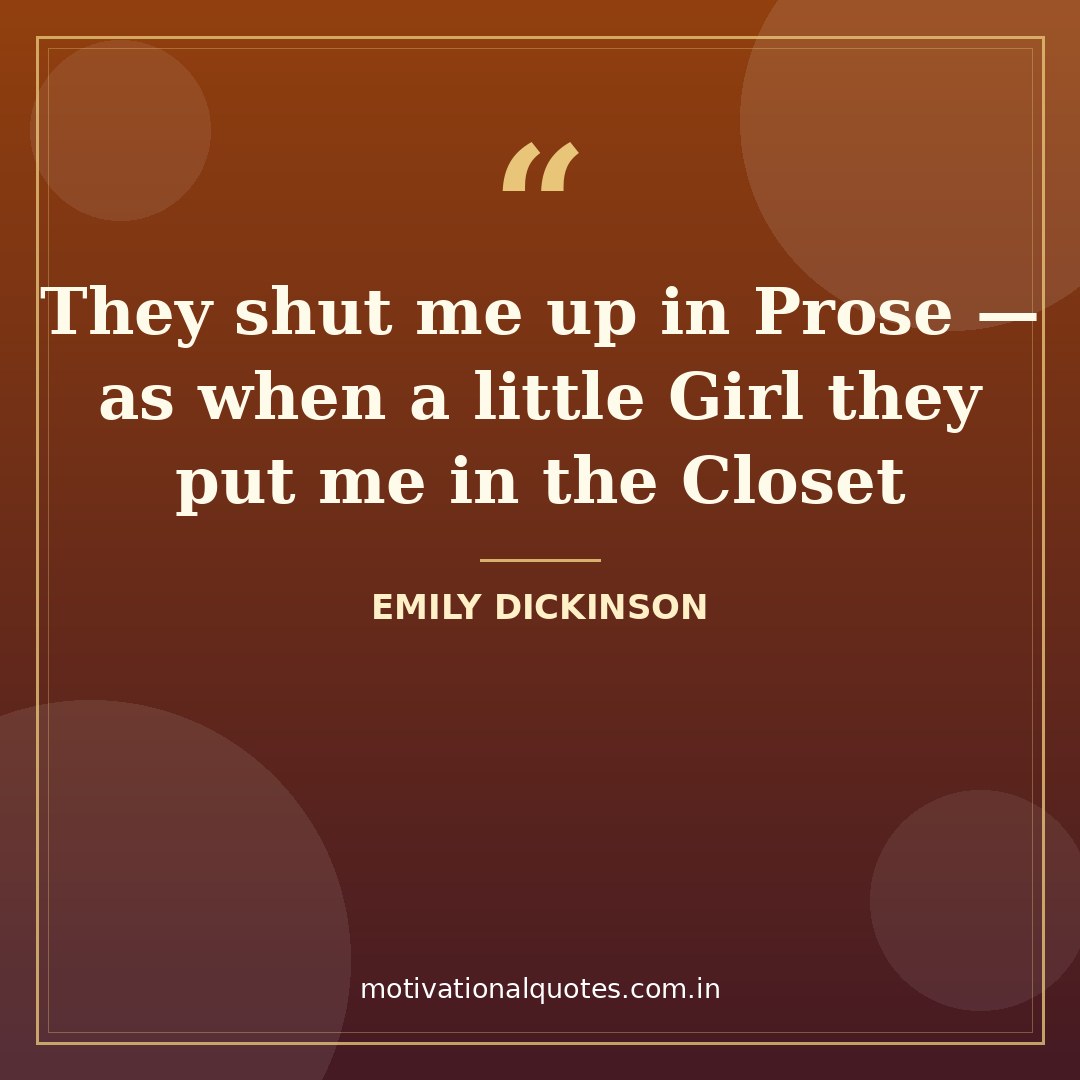
- “They shut me up in Prose — as when a little Girl they put me in the Closet” — Emily Dickinson — A protest against being boxed in and told to be quiet, ordinary and small.
- “A Bird came down the Walk” — Emily Dickinson — The calm opening of a poem that watches a bird with total, loving attention.
- “I started Early — Took my Dog — and visited the Sea” — Emily Dickinson — A playful adventure poem that begins like a children’s story and turns dreamlike.
- “Eden is that old-fashioned House we dwell in every day” — Emily Dickinson — Paradise, she hints, might be the ordinary home we already live in without noticing.
- “The pedigree of honey does not concern the bee” — Emily Dickinson — The bee does not care about fancy origins, only the flower. A sweet lesson in staying unpretentious.
- “I never lost as much but twice” — Emily Dickinson — The opening of a poem about losing what mattered most, told with restraint. For more daily reading, our collection of life quotes inspiration pairs well with her lines.
How to Use These Quotes
Keep one line where you will see it each morning — a sticky note, phone wallpaper or journal page. Dickinson works beautifully in small doses.
For Instagram captions, pair the feathers line with a plain photo of sky, birds or an open window. Her words need little decoration.
In greeting cards, the heart-from-breaking line suits thank-you and sympathy cards, while the hope lines lift a get-well message.
Teachers and book clubs can read one poem slowly, then ask what single image stayed with everyone. Her dashes spark lively discussion.
Frequently Asked Questions
Are all of these real Emily Dickinson quotes?
Yes. Every line here comes from her documented poems or letters. Where a line is best known from her letters, the note says so, and one line is marked as attributed because its exact source is debated by scholars.
What is Emily Dickinson’s most famous quote?
“Hope is the thing with feathers” is the line most people recognise first. “Because I could not stop for Death” and “I’m Nobody! Who are you?” follow close behind in classrooms and anthologies.
Why did Emily Dickinson use dashes and capital letters so often?
Her dashes create pauses, like breaths, and her capitals give ordinary words extra weight. The effect is a voice that feels spoken, urgent and private.
Can I use these Emily Dickinson quotes for a school project?
Yes. Dickinson died in 1886, so her poems are in the public domain. Quote them freely in essays and projects, crediting her by name.
Which quote should I share with a friend who is sad?
“If I can stop one heart from breaking” and the hope-with-feathers line are the gentlest choices. Both say, quietly, that the person and their pain matter.
Conclusion
Dickinson proves a quiet life can hold enormous feeling. You need no grand events to live something worth keeping — just attention: to a bird, to spring light, to one ordinary Now.
Pick one line and live with it for a week. Read it in the morning, notice where it shows up, and pass it to a friend when the moment feels right.
