
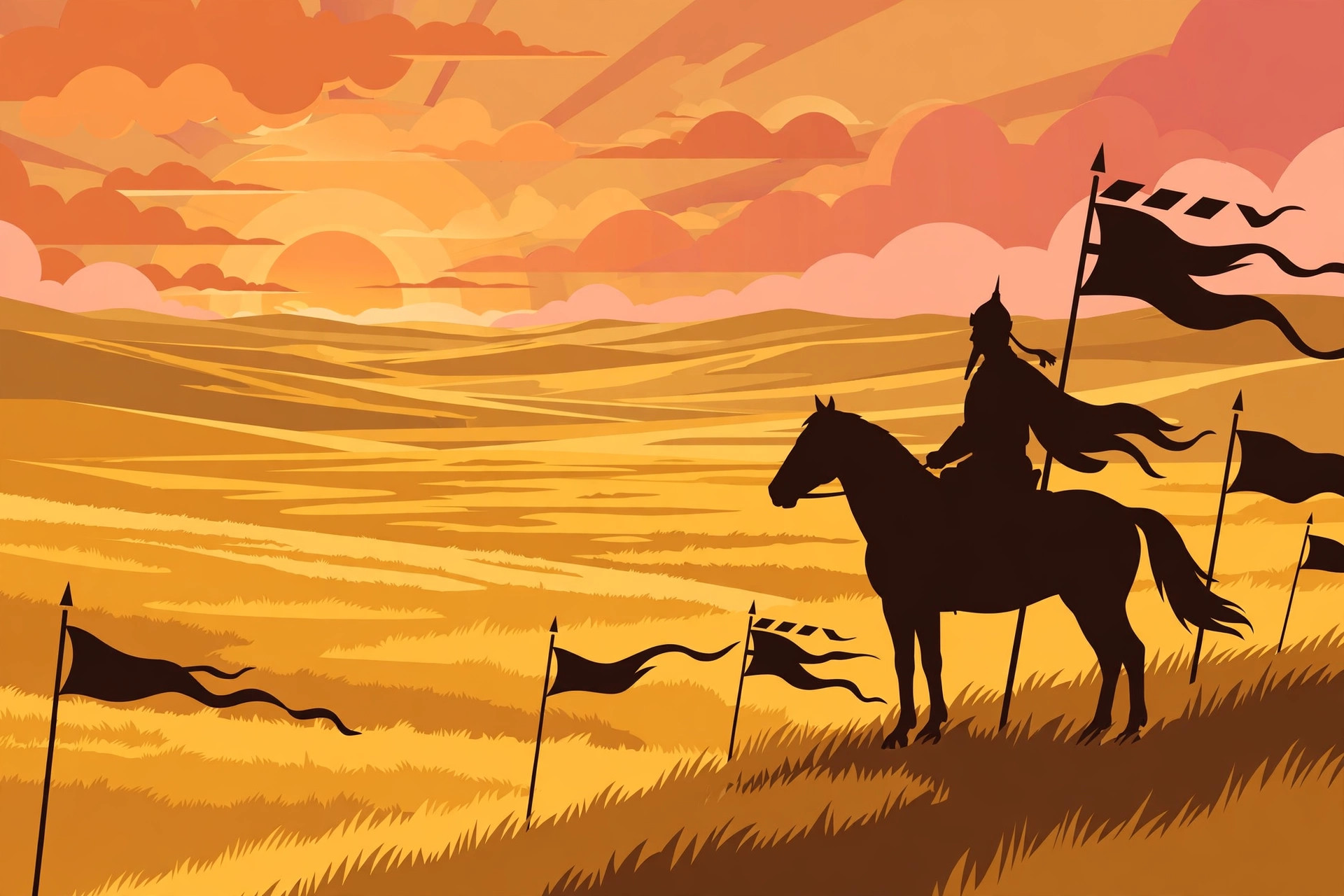
Genghis Khan Quotes: 40 Words on Leadership, Will and Conquest
Genghis Khan, born Temujin around 1162, united the scattered Mongol tribes and built the largest land empire in history. His words survive through chronicles such as The Secret History of the Mongols and through later historians, so some lines below are documented sayings and others are clearly marked as attributed.
This collection focuses on the themes readers look for most: leadership, discipline, loyalty, courage, and relentless determination. These are not gentle quotes. They come from a hard steppe world of survival and conquest, and they should be read in that context.
Even so, many of his observations about unity, merit, and self-control still speak to leaders, athletes, and builders today. Learn more on his Wikipedia page.
Genghis Khan Quotes on Leadership
- “I am the punishment of God. If you had not committed great sins, God would not have sent a punishment like me upon you.” — Genghis Khan, attributed to Khan in accounts of the fall of Bukhara, a chilling warning to a defeated city.
- “With Heaven’s aid I have conquered for you a huge empire. But my life was too short to achieve the conquest of the world. That task is left for you.” — Genghis Khan, attributed last words to his sons about continuing the work.
- “A leader can never be happy until his people are happy.” — Genghis Khan, attributed to Khan, and a surprisingly people-first view of rule.
- “One arrow alone can be easily broken but many arrows are indestructible.” — Genghis Khan, attributed to a lesson he taught his sons using a bundle of arrows.
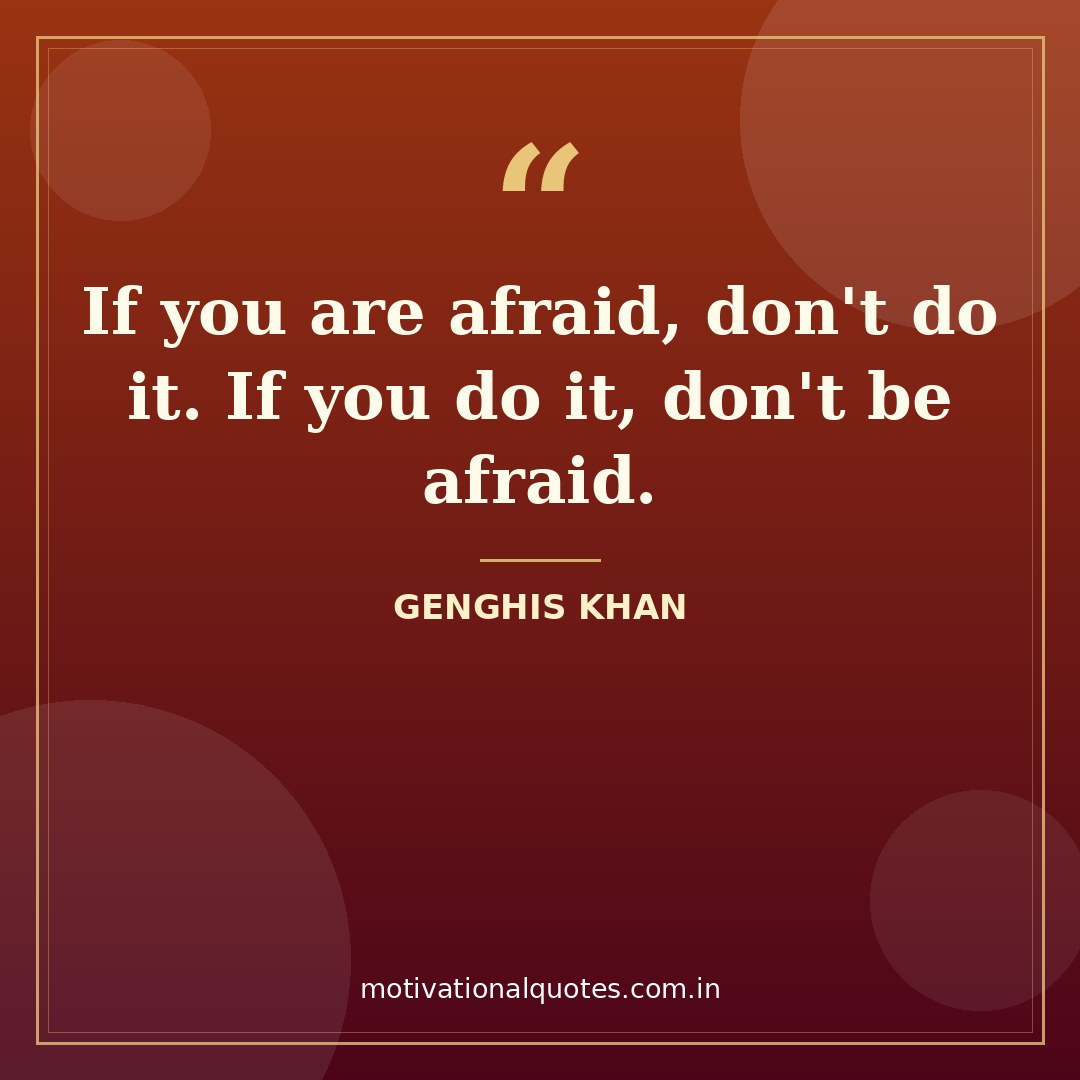
- “If you are afraid, don’t do it. If you do it, don’t be afraid.” — Genghis Khan, attributed to Khan, and a blunt rule for committed action.
- “Heaven grew weary of the excessive pride and luxury of China. I am from the barren north. I wear the same clothing and eat the same food as the cowherds and horse-herders.” — Genghis Khan, from his documented letter to a Taoist sage, contrasting steppe simplicity with empire.
- “Those who were adept and brave were made chiefs of companies. Those who were diligent were made leaders.” — Genghis Khan, reflecting his famous habit of promoting by merit, not birth.
- “A man’s greatest joy is crushing his enemies.” — Genghis Khan, from The Secret History tradition, expressing the harsh joy of victory in his world.
For more on drive and mindset, see these broader life quotes for inspiration.
Genghis Khan Quotes on Strength and Will
- “Conquering the world on horseback is easy; it is dismounting and governing that is hard.” — Genghis Khan, attributed to Khan, and a wise warning about what follows victory.
- “If my body dies, let my body die, but do not let my country fall.” — Genghis Khan, attributed to Khan, expressing loyalty to the nation above personal safety.
- “There is no good that does not meet with evil.” — Genghis Khan, attributed sayings in Mongol tradition, a sober view of fortune.
- “The greatest happiness is to scatter your enemy, to drive him before you, to see his cities reduced to ashes.” — Genghis Khan, a documented-style saying recorded by Persian historians, reflecting the brutal values of his age.
- “I will rule them by fixed laws so that rest and happiness shall prevail in the world.” — Genghis Khan, attributed to his legal reforms under the Yassa code.
- “Be of one mind and one faith, that you may conquer your enemies and lead long and happy lives.” — Genghis Khan, attributed advice to his followers on unity of purpose.
- “Without the vision of a goal, a man cannot manage his own life, much less the lives of others.” — Genghis Khan, attributed to Khan, and a strikingly modern leadership point.
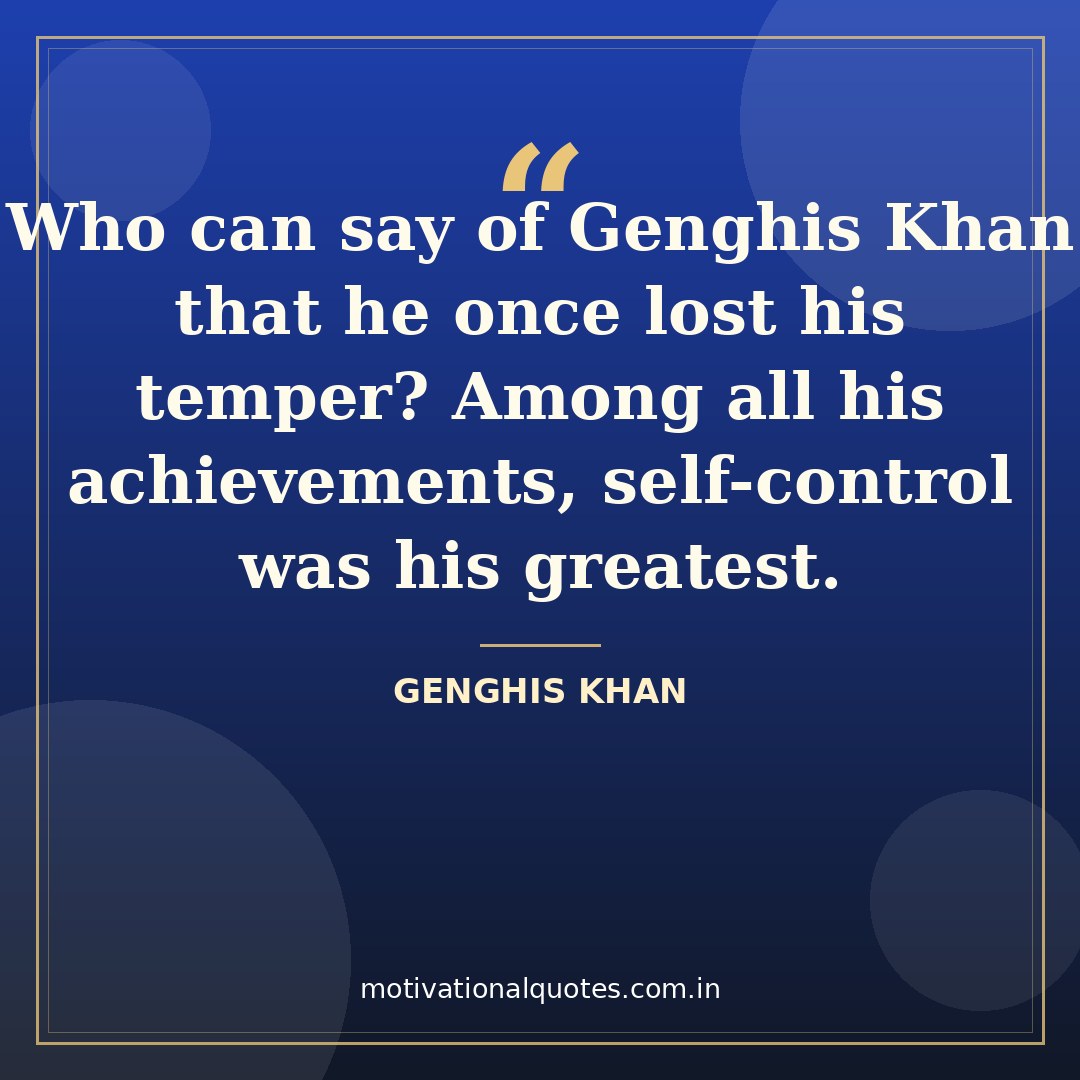
- “Who can say of Genghis Khan that he once lost his temper? Among all his achievements, self-control was his greatest.” — Genghis Khan, a tribute recorded by historians about his discipline, rather than his own words about himself.
Genghis Khan Quotes on Unity and Loyalty
- “My life was too short to achieve the conquest of the world. That task is left for you.” — Genghis Khan, attributed farewell that turned his sons into partners in a shared mission.
- “All who surrender will be spared; whoever does not surrender but opposes with struggle and dissension, shall be annihilated.” — Genghis Khan, a documented ultimatum pattern used before sieges in Mongol campaigns.
- “In a single generation, the Mongols went from herding sheep to ruling half the known world.” — Genghis Khan, a summary often attributed in histories to describe the scale of unity he created, rather than a verbatim quote.
- “Even when a friend does something you do not like, he continues to be your friend.” — Genghis Khan, attributed to Khan, showing the loyalty he demanded and gave.
- “A person who can rule his own household can rule a province; a person who can rule ten households can rule a thousand.” — Genghis Khan, attributed principle behind his decimal system of organization.
- “Loyalty is the first quality I demand. Betrayal, even of an enemy who has surrendered, is unforgivable.” — Genghis Khan, attributed principle reflected in stories of his punishment of oath-breakers.
- “The strength of a wall is neither greater nor less than the courage of the men who defend it.” — Genghis Khan, attributed to Khan during siege campaigns, valuing morale over stone.
- “We Mongols are a people of the felt tents, united under one sun.” — Genghis Khan, attributed phrasing for the unity of tribes under one khan.
Readers who like bold, confident lines may also enjoy attitude quotes for boys for a modern take on confidence.
Genghis Khan Quotes on War and Strategy
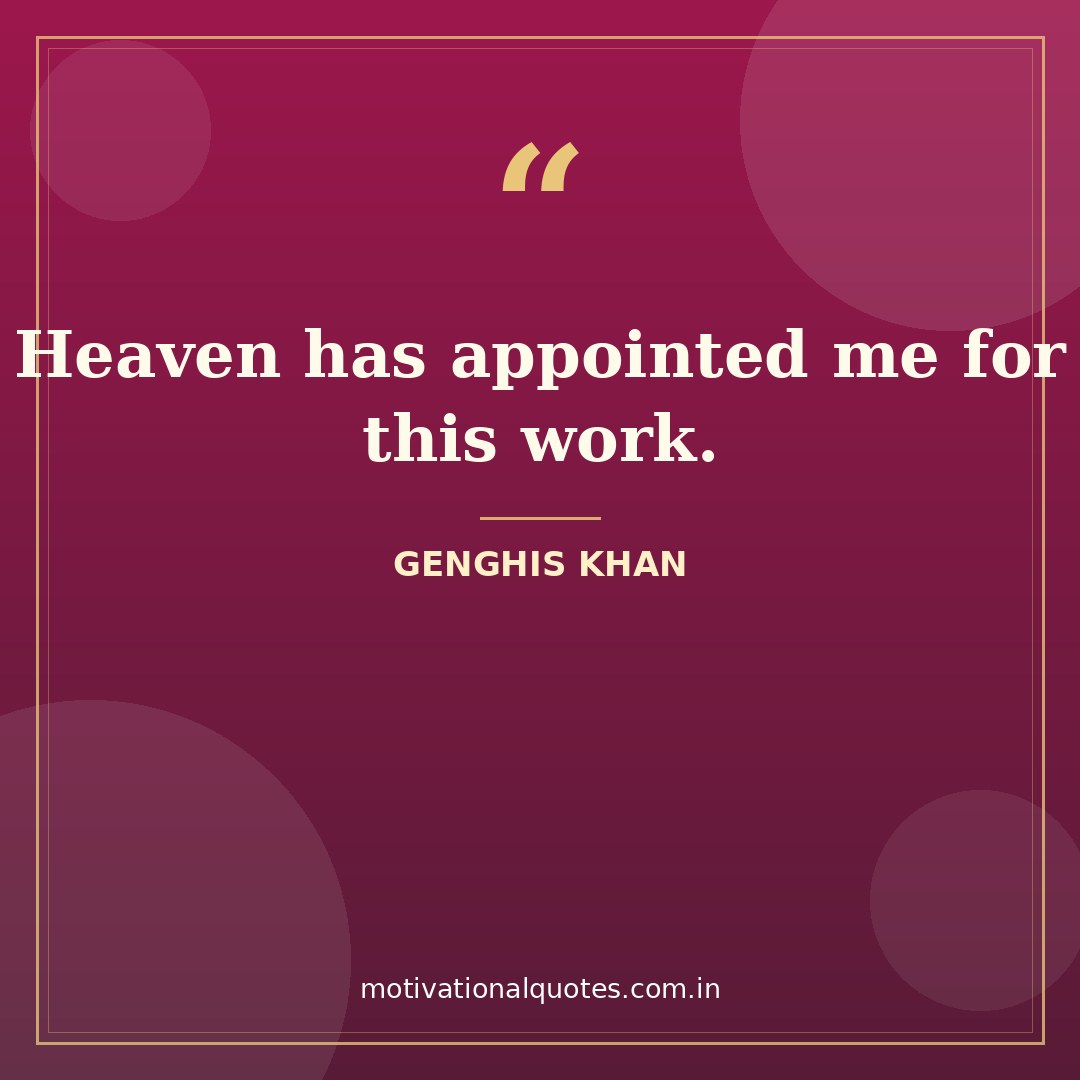
- “Heaven has appointed me for this work.” — Genghis Khan, his documented belief that his mission carried divine approval.
- “I am the flail of God. Had you not created great sins, God would not have sent me to punish you.” — Genghis Khan, a variant of the Bukhara warning recorded by Persian chroniclers.
- “The Mongols make use of all peoples and all skills. A captured craftsman is worth more than a dead one.” — Genghis Khan, attributed policy that explains why engineers and artisans were spared and employed.
- “Speed is the essence of war. Take the enemy by surprise and attack routes he has not prepared.” — Genghis Khan, attributed strategic principle reflected in his rapid campaigns across Asia.
- “Know your enemy’s roads, rivers, and seasons better than he knows them himself.” — Genghis Khan, attributed scouting doctrine behind Mongol intelligence networks.
- “A siege is won before the first arrow, by hunger, fear, and division inside the walls.” — Genghis Khan, attributed siege wisdom from the China and Khwarezm campaigns.
- “Do not let the enemy rest in winter or summer. Pursuit does not stop for weather.” — Genghis Khan, attributed order that explains Mongol winter offensives on frozen rivers.
- “Reward the messenger who brings bad news quickly, for late truth is useless.” — Genghis Khan, attributed rule showing how much he valued fast, honest information.
Short Genghis Khan Quotes
- “Man’s highest joy is in victory.” — Genghis Khan, a short form of his victory saying preserved in chronicles.
- “One mind, one faith, one khan.” — Genghis Khan, attributed rallying idea behind Mongol unity, expressed here in short form.
- “Fear nothing but failure to act.” — Genghis Khan, attributed in spirit to his rule about fear and action stated earlier.
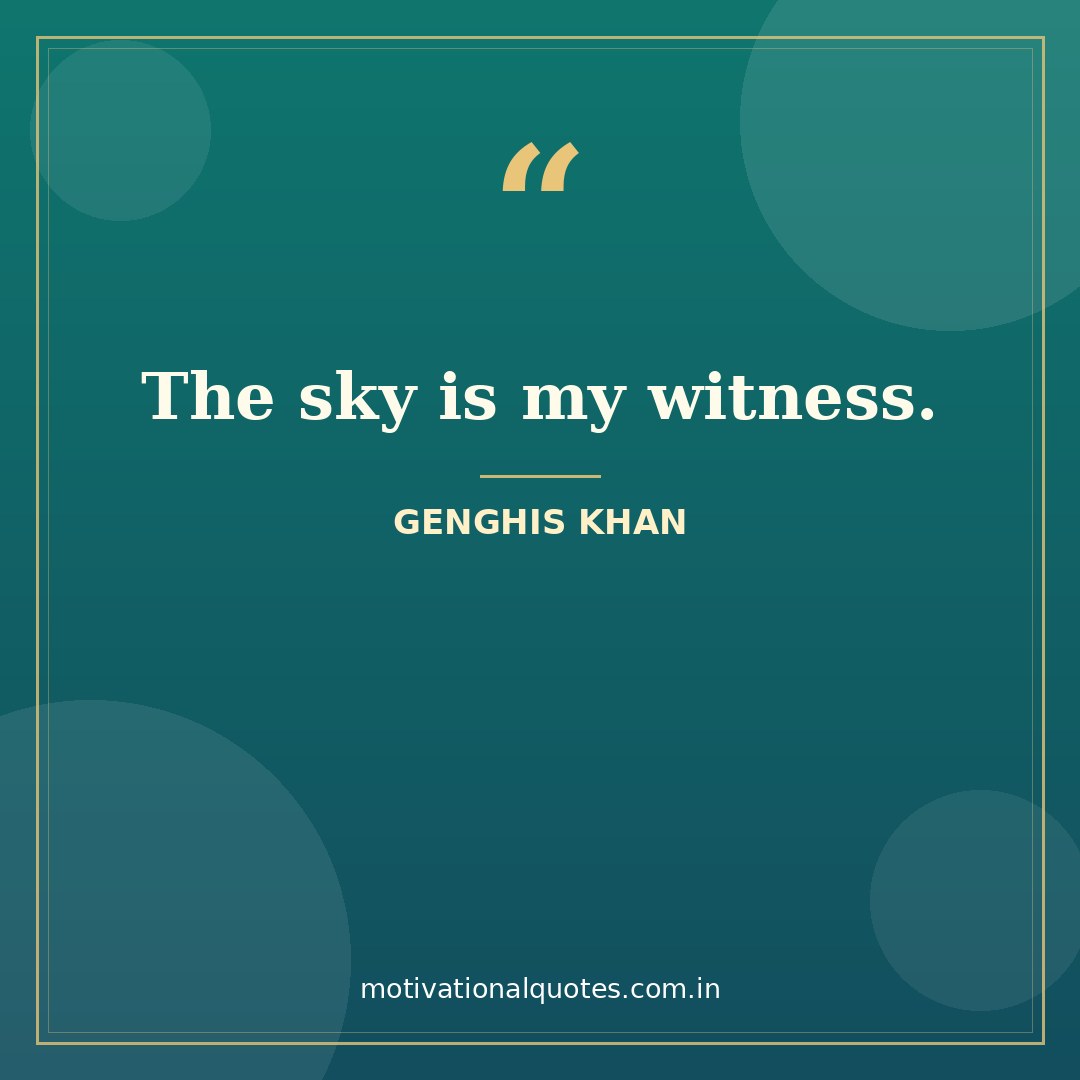
- “The sky is my witness.” — Genghis Khan, attributed oath language common in Mongol tradition.
- “My descendants will wear gold, eat the finest foods, and forget the simple life that made us strong.” — Genghis Khan, attributed warning that luxury would weaken his empire.
- “A warrior’s wealth is his horse, his bow, and his word.” — Genghis Khan, attributed steppe saying about the tools and honor of a Mongol rider.
- “Where I ride, the grass trembles.” — Genghis Khan, attributed boast in oral tradition, best read as legend rather than record.
- “Let the world be one house under one ruler, or let it learn why it should be.” — Genghis Khan, attributed ambition that captures the scale of his project.
A daily rotation of strong lines like these fits well with a thought of the day practice.
How to Use These Quotes
Use leadership quotes from this list in essays on management, military history, or empire building, and always add context about the 1200s steppe world.
For motivation, choose the attributed lines on fear, vision, and self-control. They translate most cleanly into modern goals like training, study, and business.
In a presentation, one short quote at the start of a section on unity or meritocracy can set the theme without turning the talk into a history lecture.
Avoid using the harsh conquest quotes as casual captions. They describe real violence against real cities, and thoughtful readers respect that weight.
How to Choose the Right Quote
If you need a quote about teamwork, use the bundle of arrows lesson. It is vivid, visual, and easy for any audience to grasp.
If you need a quote about personal discipline, the self-control tribute and the fear rule are the strongest choices. They focus on character, not conquest.
For history writing, prefer documented lines from letters and chronicles, and label attributed sayings honestly. That accuracy makes your work more credible, not less interesting.
Frequently Asked Questions
What is Genghis Khan’s most famous quote?
The “punishment of God” warning and the bundle of arrows lesson are the most widely quoted. Both are attributed through chronicles rather than written by Khan himself.
Did Genghis Khan write his quotes down?
No. He was likely not literate in the modern sense. His words survive through secretaries, The Secret History of the Mongols, and Persian and Chinese historians.
What was Genghis Khan’s real name?
He was born Temujin, around 1162 near the Onon River. He received the title Genghis Khan in 1206 when the Mongol tribes united under him.
Are Genghis Khan quotes good for motivation?
The attributed quotes on unity, merit, fear, and self-control work well for motivation. The conquest quotes are better used for historical discussion.
What is the Yassa?
The Yassa was the legal code attributed to Genghis Khan. It governed discipline, trade protection, and religious tolerance across the empire.
Conclusion
Genghis Khan’s words are a window into a mind that valued unity, merit, speed, and iron self-control. Read with context, they explain both his astonishing success and the harshness of his age.
Choose the quotes that teach discipline and teamwork, label attributed lines honestly, and you will have a collection that is both powerful and historically fair.
